Global Health
Stemp in Africa
Bringing continuous temperature monitoring to clinics and communities across Africa, where catching a fever early can change everything.
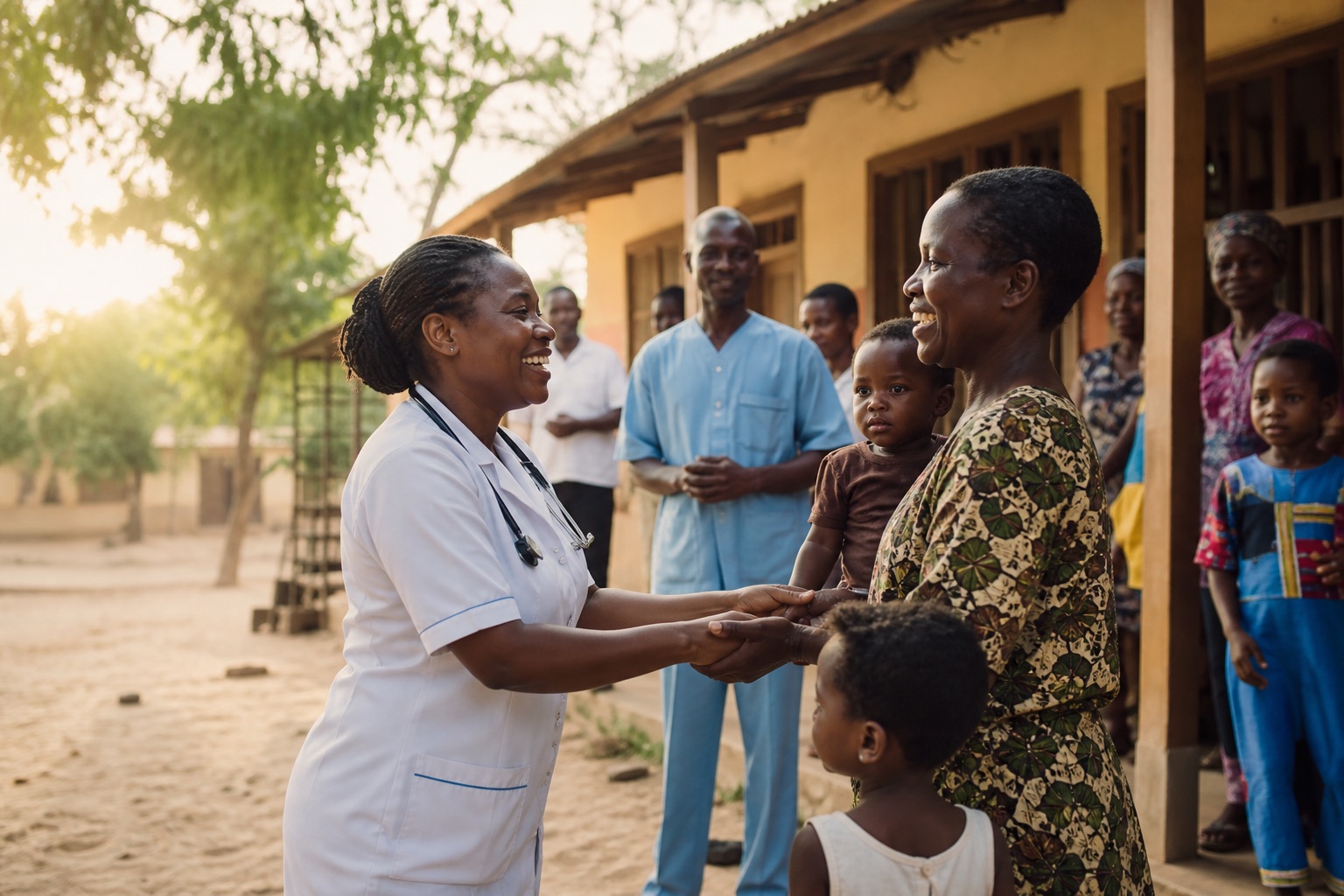


Temperature is one of the earliest and most universal signs that something is wrong. In settings where infectious illness moves quickly and care can be far away, those early hours matter enormously. A continuous reading doesn't depend on someone being present at the right moment with the right tool; it watches quietly and flags change as it happens. That shift from a single spot check to an ongoing signal can be the difference between a problem caught early and one caught too late.
Across much of the continent, the burden of fever-driven illness from malaria to respiratory infection falls hardest on young children and people far from a clinic. Continuous monitoring won't solve those challenges on its own, but it gives families and health workers something they rarely have: a clear, timely picture of when a temperature is rising and when it's time to seek help. Better information, available sooner, is where better outcomes begin.
A device only helps if it works where it's needed. The Stemp patch is designed to run for days on a single charge, hold up to heat and humidity, and sync to an affordable phone rather than expensive equipment. There's nothing to calibrate by hand and no steady supply of disposable parts to keep buying. We've focused on durability, simplicity, and low cost precisely because the hardest places to deliver care are the places where complicated tools fail first.
Just as important, the readings are easy to understand at a glance. A community health worker visiting several households a day doesn't need a spreadsheet; they need to know, quickly, whose temperature is trending the wrong way. The app turns continuous data into plain, actionable signals, so the technology stays in the background and the decision stays with the person providing care.
Stemp works through partnerships rather than around them. We collaborate with local clinics, ministries of health, and humanitarian organizations who already understand their communities, and we fit our tools to how they work not the other way around. Patches and phones are placed where frontline staff can put them to use, with monitoring tied into the care these partners already provide. The goal is never to replace local health systems but to strengthen them with a steady, shared view of the patients they serve.
Technology is only as good as the hands it reaches. A large part of every Stemp deployment is training helping community health workers apply the patch, read the app, and know when a trend warrants escalation. Because the system is built to be simple, that training is measured in hours, not weeks. Once equipped, a single worker can keep an eye on far more people than a round of manual checks would ever allow, stretching limited staff much further across the communities that depend on them.
Stemp in Africa is an ongoing commitment, not a one-time gesture. With every clinic we partner with and every health worker we train, we learn how to make continuous monitoring more useful in the settings that need it most, and we fold those lessons back into the work. Our aim is simple and long term: to help ensure that a rising temperature is noticed in time, wherever someone happens to live. If you represent a clinic, an NGO, or a funder who shares that aim, we'd welcome the conversation.
.svg)