Caregivers
Clinical Temperature Monitoring Best Practices
How clinical teams and caregivers use continuous readings to respond faster and document care more clearly.
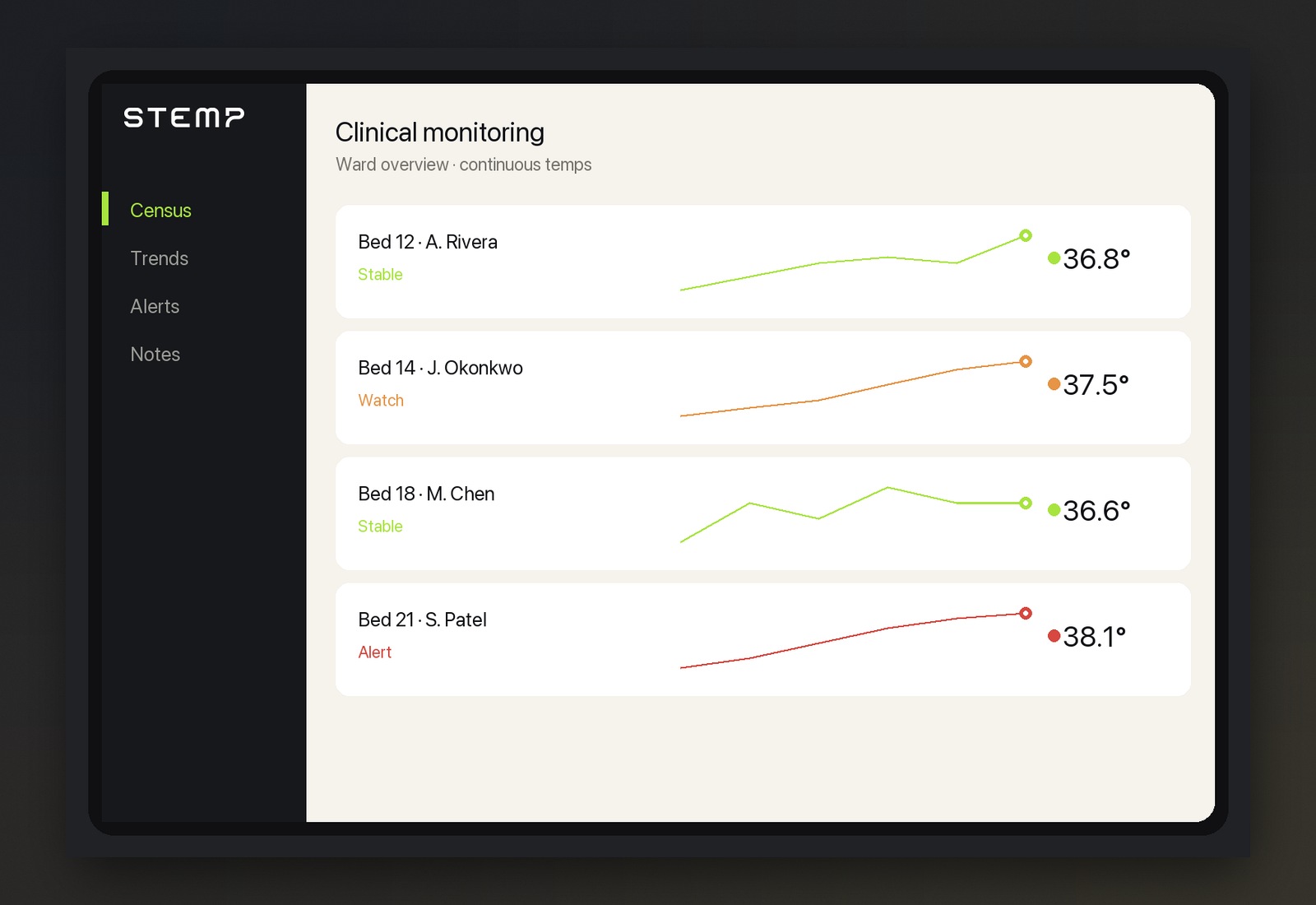


A single temperature reading tells you what is happening right now. Continuous monitoring shows how readings change over time, which often matters more for clinical decisions.
Stemp gives caregivers and clinicians a running view of trends, so you can spot sustained elevation, gradual rises, or recovery patterns instead of reacting to one number in isolation.
Work with your pediatrician, nurse, or specialist to set alert ranges that match the patient's age, condition, and treatment plan. What counts as a concern varies by case.
Write down who responds at each threshold: parent at home, on-call nurse, or escalation to the care team. Clear rules reduce guesswork during stressful moments.
When multiple people support the same patient, shared access keeps everyone aligned. Invite family caregivers or clinical staff to view live trends and receive alerts based on their role.
For visits and handoffs, note when readings started rising, how long they stayed elevated, and what changed overnight. Trend summaries help clinicians act on context, not a snapshot.
A quick morning check of overnight trends catches issues early and builds confidence during recovery. Pair Stemp history with your care team's guidance so monitoring supports the plan, not replaces it.
.svg)